





Introduction to OOH Planning in Pakistan's 2027 Media Landscape
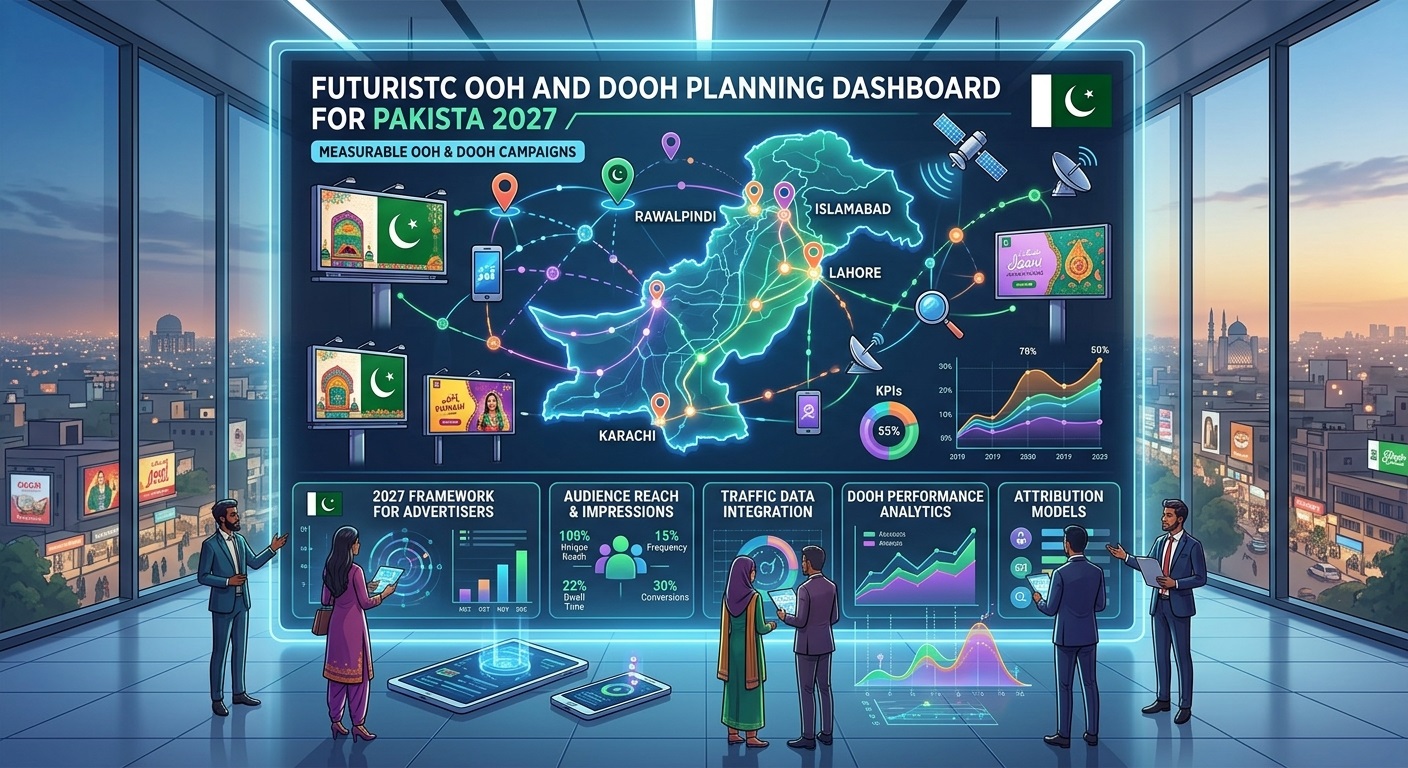
Out-of-home (OOH) advertising in Pakistan has transitioned from conventional static hoarding placements to a sophisticated mix of traditional infrastructure and high-impact digital out-of-home (DOOH) networks. For advertisers, media planners, and agency heads navigating 2027 budgets, success relies on moving away from purely speculative bookings toward audience-centric, data-led frameworks. Evaluating location metrics, traffic density, format selection, and brand safety ensures every rupee spent delivers verifiable reach and tangible commercial impact.
The Evolution of Static OOH Versus DOOH Networks
Understanding the distinct roles of static billboards and digital SMD screens is fundamental to modern campaign design. Static OOH continues to dominate high-visibility corridors—such as main arterial routes in Karachi, Lahore, and Islamabad—offering unmatched long-term presence and unmissable physical scale. Conversely, DOOH and expanding indoor-outdoor SMD networks provide dynamic flexibility, enabling time-targeted messaging, rotational creative rotation, and synchronized multi-brand campaigns.
Marketers must balance these formats based on campaign objectives:
- Static Billboards: Ideal for long-term brand building, high-impact product launches, and establishing dominant visual presence along major urban expressways.
- DOOH & SMD Screens: Perfect for time-sensitive promotions, dynamic creative optimization (DCO), and capturing high-attention footfall in commercial hubs, airports, and major shopping districts.
City Selection and Urban Corridor Mapping
Pakistan's OOH ecosystem is heavily concentrated across key metropolitan centers, each presenting distinct audience dynamics and regulatory environments. Effective campaign planning begins with precise geographic prioritization:
- Karachi: High-density commuter traffic across major corridors like Shahrah-e-Faisal and Rashid Minhas Road requires bold, high-contrast creative execution and robust placement verification.
- Lahore: High-traffic commercial arterial routes such as Main Boulevard Gulberg, Jail Road, and the Canal Bank Expressway offer prime visibility targeting diverse socio-economic segments.
- Islamabad & Rawalpindi: Premium administrative and commercial zones where regulatory compliance, aesthetic alignment, and clean visual planning are strictly enforced by municipal authorities.
Traffic, Audience Data, and Measurement Frameworks
A persistent challenge in traditional outdoor advertising has been the reliance on subjective estimates rather than empirical audience data. In 2027, professional media planners leverage traffic flow analytics, vehicular count surveys, and footfall heatmaps to estimate impression delivery.
While third-party audience measurement meters are still maturing in Pakistan's outdoor sector, agencies establish baseline accountability by auditing site visibility, checking obstruction factors (such as bridge structures or tree lines), and analyzing peak commuting hours. Combining these physical audits with mobile location data insights helps estimate true daily effective circulation (DEC).
Budget Allocation and Cost Efficiency Strategies
Optimizing OOH budgets requires a disciplined approach to site negotiation and duration planning. Premium static sites command higher rates due to exclusive positioning, but blending them with tactical DOOH bursts can optimize overall reach without inflating costs.
- Negotiate flexible booking windows for digital networks, leveraging off-peak hour slots if relevant to target demographics.
- Allocate contingency funds for regulatory renewals, municipal fee adjustments, and timely creative maintenance during adverse weather conditions.
- Combine multi-site packages with media owners to secure volume-based rate efficiencies.
Brand Safety, Compliance, and Regulatory Realities
Outdoor advertising in Pakistan operates under strict municipal supervision, where compliance is non-negotiable. Advertisers must navigate local Cantonment Board, PHA (Parks and Horticulture Authority), and municipal corporation guidelines regarding structural safety, content appropriateness, and illumination standards.
Brand safety in OOH also extends to physical placement context. Ensure your creative assets do not compete with distracting visual clutter or violate local advertising codes. Securing advance municipal NOCs (No Objection Certificates) prevents abrupt campaign shutdowns and protects your brand reputation.
Campaign Execution Checklist for Advertisers
Use this practical framework to ensure your 2027 OOH and DOOH campaigns are thoroughly vetted before launch:
- Define Objectives: Establish whether the campaign focuses on upper-funnel awareness or immediate footfall driving.
- Audience Mapping: Align target consumer demographics with specific urban transit routes and neighborhood profiles.
- Site Audit: Physically inspect or review verified digital proofs of proposed billboard locations for sightlines and potential obstructions.
- Creative Optimization: Design bold, uncluttered visuals with readable typography optimized for a 3-second viewer glance.
- Compliance Check: Confirm all municipal permissions, lighting clearances, and legal permits are finalized.
- Post-Campaign Verification: Conduct physical or digital photo audits throughout the campaign lifecycle to verify display uptime and creative integrity.
Conclusion
Planning measurable out-of-home campaigns in Pakistan requires a disciplined blend of creative boldness and rigorous data discipline. By understanding the distinct advantages of static and digital networks, mapping core urban corridors intelligently, and prioritizing regulatory compliance, advertisers can unlock the true power of OOH in 2027.
Sources and further reading
پاکستان کے میڈیا منظرنامے میں 2027 کے لیے آؤٹ آف ہوم منصوبہ بندی کا تعارف
پاکستان میں آؤٹ آف ہوم (OOH) اشتہار بازی روایتی ہورڈنگز سے ترقی یافتہ ڈیجیٹل نیٹ ورکس (DOOH) تک پھیل چکی ہے۔ 2027 کے بجٹ کی منصوبہ بندی کرنے والے برانڈز اور میڈیا ایجنسیوں کے لیے کامیابی کا دارومدار فرضی بکنگز کے بجائے ڈیٹا پر مبنی اور ہدف کے حامل فیصلوں پر ہے۔ مقام کے میٹرکس، ٹریفک کثافت، فارمیٹ کے انتخاب اور برانڈ سیفٹی کا جائزہ لینا اس بات کو یقینی بناتا ہے کہ خرچ ہونے والے ہر روپے کا درست اور قابلِ تصدیق نتیجہ نکلے۔
جامد OOH اور DOOH نیٹ ورکس کا تقابلی جائزہ
روایتی بل بورڈز اور ڈیجیٹل ایس ایم ڈی اسکرینز کے کردار کو سمجھنا جدید مہم کی تشکیل کے لیے بنیادی حیثیت رکھتا ہے۔ جامد OOH اہم شاہراہوں پر (جیسے کراچی، لاہور اور اسلام آباد کے مرکزی کوریڈورز) طویل المدتی اور پائیدار موجودگی فراہم کرتا ہے۔ دوسری طرف، DOOH اور ڈیجیٹل اسکرینز متحرک لچک فراہم کرتی ہیں، جس سے وقت کے حساب سے پیغامات کی تبدیلی اور ملٹی برانڈ مہمات ممکن ہوتی ہیں۔
شہروں کا انتخاب اور اربن کوریڈور मैपिंग
پاکستان کا آؤٹ آف ہوم ایکو سسٹم اہم بڑے شہروں میں مرکوز ہے۔ مؤثر مہم کا آغاز درج ذیل جغرافیائی ترجیحات سے ہوتا ہے:
- کراچی: شاہراہ فیصل اور راشد منہاس روڈ جیسے اہم کوریڈورز پر مسافروں کی بھاری ٹریفک کے لیے بولڈ اور واضح اشتہاری مواد ضروری ہے۔
- Lahore: مین بلیوارڈ گلبرگ، جیل روڈ اور کینال بینک ایکسپریس وے جیسے مصروف تجارتی راستے۔
- اسلام آباد اور راولپنڈی: پریمیم انتظامی اور تجارتی زونز جہاں بلدیاتی قوانین اور صفائی ستھرائی پر سختی سے عمل درآمد کیا جاتا ہے۔
ٹریفک، آڈیئنس ڈیٹا اور پیمائش کا فریم ورک
روایتی آؤٹ آف ہوم اشتہار بازی میں ایک مستقل چیلنج تخمینوں پر انحصار رہا ہے۔ 2027 میں پیشہ ور میڈیا پلانرز امپریشنز کا تخمینہ لگانے کے لیے ٹریفک کے بہاؤ کے تجزیات، گاڑیوں کی گنتی کے سروے اور فوٹ فال ہیٹ میپس کا استعمال کرتے ہیں۔
بجٹ کی تخصیص اور لاگت کی تاثیر
OOH بجٹس کو بہتر بنانا سائٹ کی گفت و شنید اور دورانیے کی منصوبہ بندی کے لیے ایک نظم و ضبط کا متقاضی ہے۔ پریمیم جامد سائٹس زیادہ نرخ رکھتی ہیں، لیکن انہیں ڈیجیٹل دورانیے کے ساتھ ملانے سے لاگت بڑھائے بغیر رسائی کو بہتر بنایا جا سکتا ہے۔
برانڈ سیفٹی اور ضابطہ کاری کی حقیقتیں
پاکستان میں آؤٹ آف ہوم اشتہار بازی سخت بلدیاتی نگرانی میں کام کرتی ہے۔ اشتہار دہندگان کو ساختی حفاظت، مواد کی موزوںیت اور لائٹنگ کے معیار کے حوالے سے کینٹونمنٹ بورڈ، PHA اور بلدیاتی کارپوریشن کے رہنما خطوط پر عمل کرنا ہوگا۔
اشتہار دہندگان کے لیے مہم کا چیک لسٹ
- مقاصد کا تعین کریں: طے کریں کہ مہم آگاہی پر مرکوز ہے یا فوری صارفین کی توجہ حاصل کرنے پر۔
- آڈیئنس میপিং: ہدف صارفین کے ڈیموگرافکس کو مخصوص ٹرانزٹ روٹس کے ساتھ ہم آہنگ کریں۔
- سائٹ آڈٹ: تجویز کردہ بل بورڈز کے مقامات کا معائنہ کریں۔
- تخلیقی اصلاح: 3 سیکنڈ کے دیکھنے والے کے لیے واضح اور پڑھنے کے قابل بصری ڈیزائن تیار کریں۔
- تعمیل کی جانچ: تمام بلدیاتی اجازت نامے حتمی شکل دیں۔
- مہم کے بعد کی تصدیق: ڈسپلے اپ ٹائم کی تصدیق کے لیے فوٹو آڈٹ کریں۔
نتیجہ
پاکستان میں قابلِ پیمائش آؤٹ آف ہوم مہمات کی منصوبہ بندی تخلیقی جرات اور سخت ڈیٹا ڈسپلن کا تقاضا کرتی ہے۔ جامد اور ڈیجیٹل نیٹ ورکس کے فوائد کو سمجھ کر اور ضابطہ کاری کی تعمیل کو ترجیح دے کر، برانڈز 2027 میں بہترین نتائج حاصل کر سکتے ہیں۔